
Smuta (2024): On the instrumentalization of historical memory in a state-funded video game

On April 4, 2024, the video game Smuta (“The Time of Troubles”) was released exclusively for the Russian market. Funded by the Russian government through the Internet Development Institute (IRI) to the tune of more than 500 million rubles, the game was designed to promote state-approved content among young people and to strengthen “civic identity”
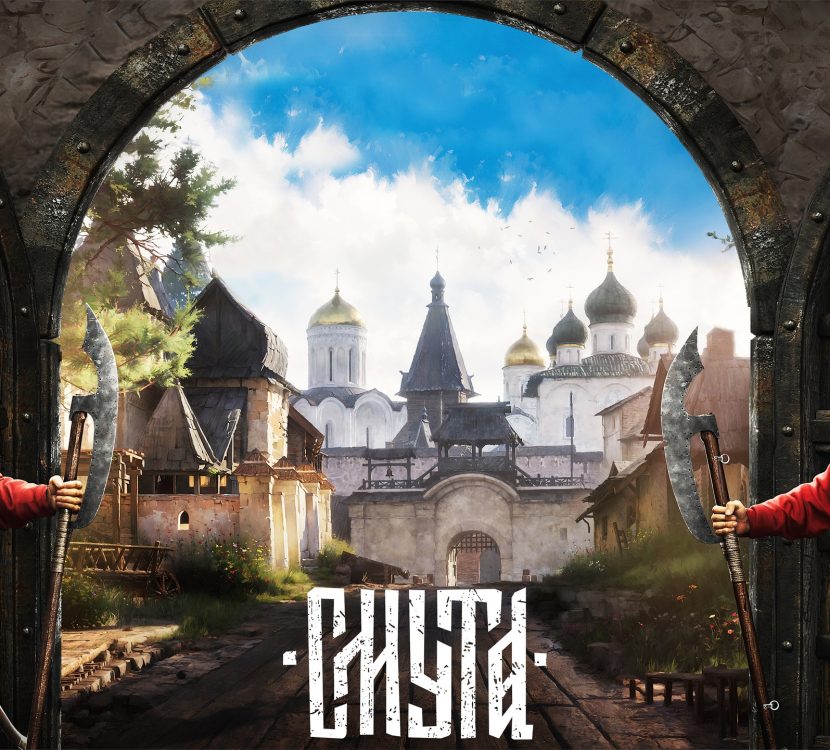
On April 4, 2024, the video game Smuta (“The Time of Troubles”) was released exclusively for the Russian market. Funded by the Russian government through the Internet Development Institute (IRI) to the tune of more than 500 million rubles, the game was designed to promote state-approved content among young people and to strengthen “civic identity” (IRI Funding Documentation, 2022, p. 4).

Given the game’s ideological significance, one aspect intrigued me even before release: how the developers would represent the episode involving Kuzma Minin’s appeal to the people of Nizhny Novgorod — the one where he speaks of selling their wives and children to save the fatherland. (In my next post, I’ll analyze how streamers responded to this passage in the game.)

From Chronicle to Schoolbook

The original version of this episode appears in the New Chronicle (Novy Letopisets, 17th century), which served as the basis for many later retellings:

And from all the towns they gathered into one city — Nizhny Novgorod. The people of Nizhny, fervent in their Orthodox Christian faith and unwilling to see that faith turn to Latin heresy, began to think how they could help the Muscovite state. One of them, a meat trader named Kuzma Minin, called out to the people:

‘It is our duty to help the Muscovite state. We must not spare our lives. Not only our lives — let us sell our houses, pawn our wives and children, and plead for someone to rise up and lead us in defense of the true Orthodox faith.’” (Complete Collection of Russian Chronicles PSRL»), St. Petersburg, 1910, Vol. XIV, p. 116)

It is no surprise that this scene was easily absorbed into the state’s historical canon, appearing in both Soviet and post-Soviet school textbooks — albeit with a shift in interpretation: from defending Orthodoxy to defending the fatherland-as-state. For instance, a 2021 7th-grade textbook edited by Vladimir Medinsky reads:

As the head of the zemstvo, Minin dedicated himself fully to the cause of liberating the homeland. He began collecting donations and was the first to contribute all his savings and part of his property.

‘If we want to help the Muscovite state,’ Minin said, ‘we must not spare our property or our lives. Not only our lives — let us sell our homes, let us pawn our wives and children.’” (T. Chernikova, History of Russia: 16th to Late 17th Century, Medinsky ed., Moscow: Prosveshchenie, 2021, p. 162)

“Pawn Our Wives and Children” — Now in Video Game Form

In Smuta — actively developed in 2022–2023 — the narrative shifts once again, this time toward a focus on supporting the military. Here’s how the episode is rendered in-game:

Citizens of Nizhny Novgorod, people of Rus’! Who among you does not know the sufferings of our realm? We all see its destruction and ruin, and yet no help comes.

How long shall villains water the Russian land with the blood of our brothers? How long shall the Orthodox suffer under the shameful yoke of infidels?

Shall we leave Moscow in the hands of the enemy?

Answer, citizens and brothers! Shall we, dying for our Christian faith, grudge our earthly possessions? No! To support the army, we will give all our gold and silver.

And if that is not enough — we shall sell all our property!

Let us pawn our wives and children.

Here, all that I own — it now belongs to the Orthodox army!

As for myself, for all of us — our very blood belongs to the land of Rus’!

Thus, the historical figure of Minin and his speech have once again been mobilized to serve the needs of contemporary ideological discourse. This time, however, the reinterpretation was not received without friction. In my next post, I will examine how streamers responded — often with disbelief or irony — to this spectacular proposition of selling one’s family for the sake of the army.

Previous:
In the Name of the Party! (TBA): A Podcast Interview with the Developers of a Game Set in the Samosbor Universe (in Russian)
Next:
Smuta (2024): “Let Us Pawn Our Wives and Children” — Streamers React (in Russian)