
Assembling Buran (1991) & Star Wars (1988): Cultural Memory of the Buran Space Program

Today, we take a closer look at two Soviet-era video games united by a common theme — cultural memory of the USSR’s Buran space shuttle program. Let’s dive right in and start, quite literally, by assembling our very own Buran! Assembling Buran (1991) was released for the Soviet — and later Belarusian — Byte computer,
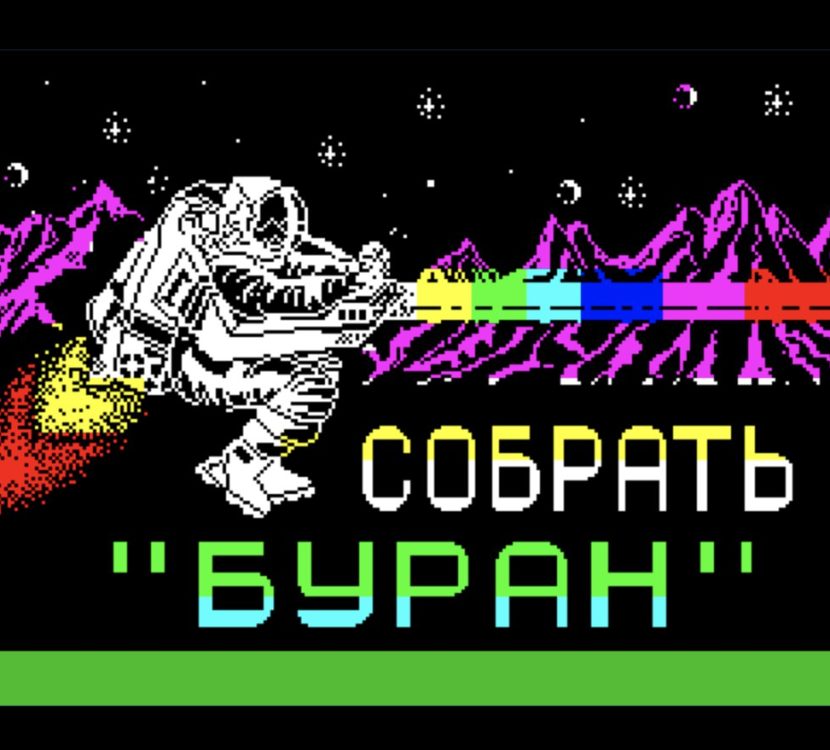
Today, we take a closer look at two Soviet-era video games united by a common theme — cultural memory of the USSR’s Buran space shuttle program. Let’s dive right in and start, quite literally, by assembling our very own Buran!

Assembling Buran (1991) was released for the Soviet — and later Belarusian — Byte computer, a ZX Spectrum clone manufactured from 1990 onward by the Brest Electromechanical Plant (BEMZ). The game later appeared on the Soviet-Belarusian home console Elf, also developed in Brest, by the Special Design Bureau “Zapad” (“West”) and produced at the local Tsvetotron factory. Eventually, Assembling Buran was adapted for the Soviet-Russian arcade machine Foton, made by a cooperative of the same name in Penza.
Piece by Piece

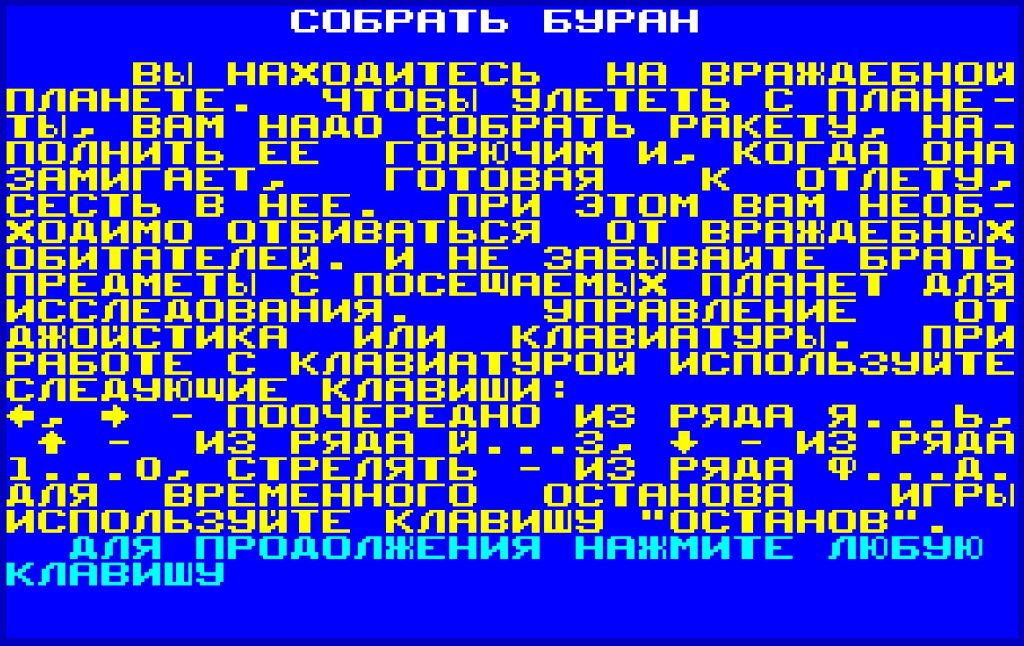
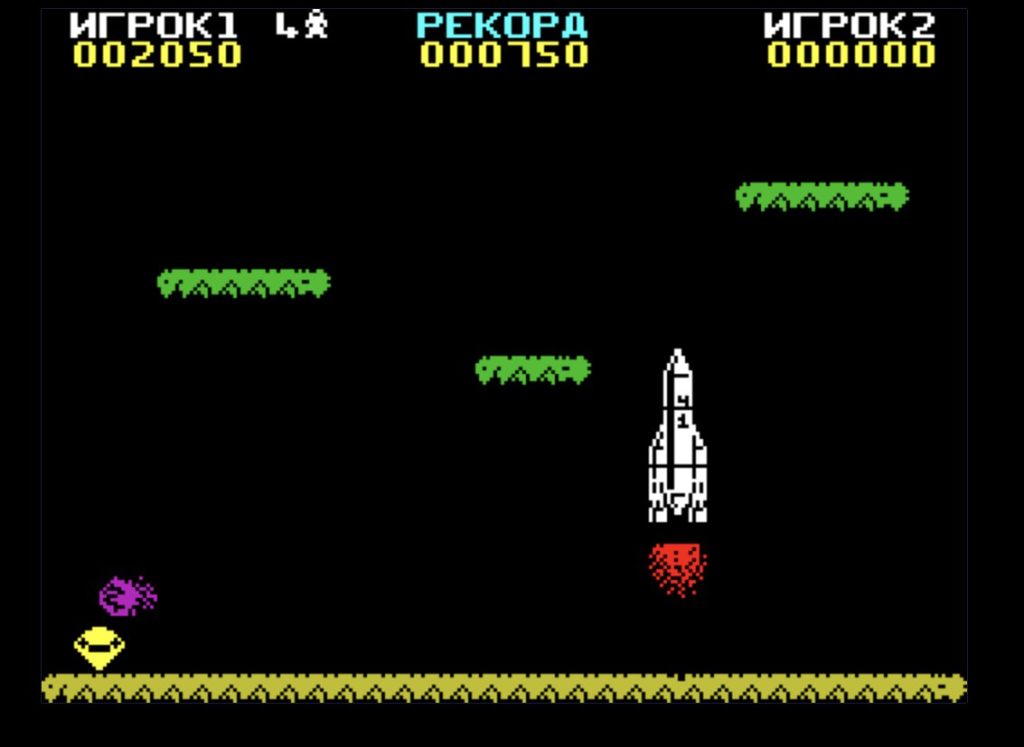
As the title suggests, in Assembling Buran your goal is to gather scattered parts of your spaceship — after a crash on a hostile planet full of monsters — refuel it, and finally escape the alien world aboard your trusty Buran. There’s just one small problem: it’s not actually a Buran. It’s an American Space Shuttle.

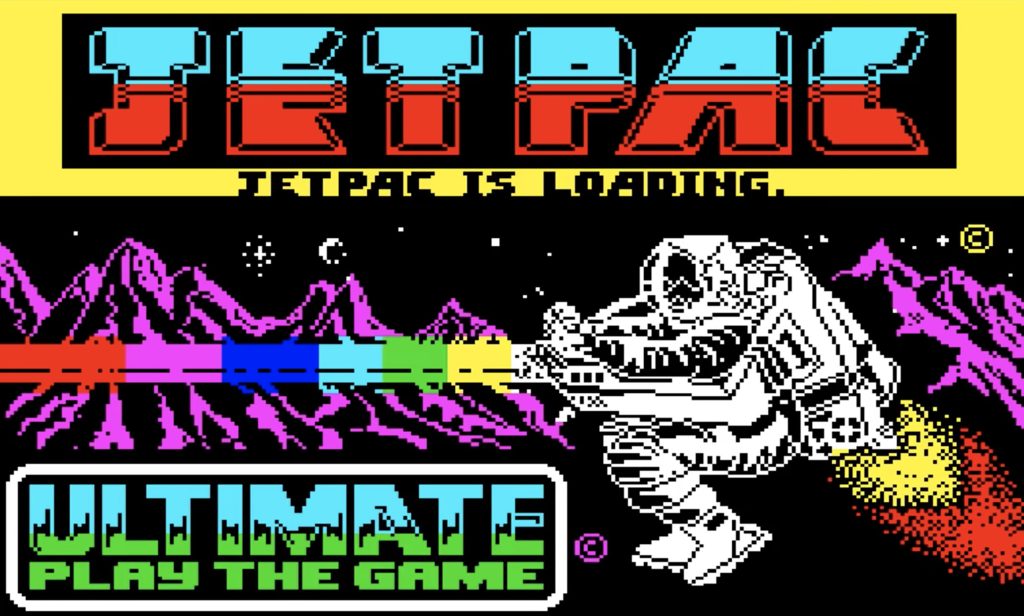
You see, Assembling Buran is in fact a port of the British game Jetpac, developed by Ultimate Play the Game in 1983 for the ZX Spectrum. The BEMZ developers reworked it for their own platform, wrapped it in a Soviet-style backstory, and rebranded the shuttle as Buran — complete with patriotic framing.

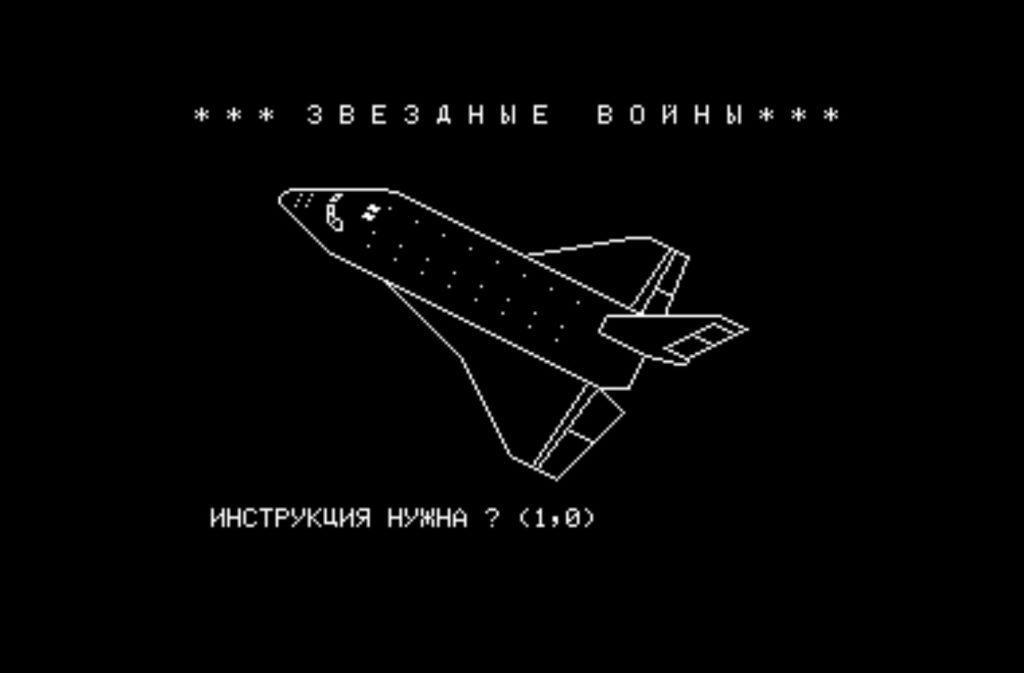
Having now rebuilt the Buran, we’re ready to launch into the next game — Star Wars (file name: BURAN), released three years earlier in 1988 for the Soviet computer platform “Specialist.”

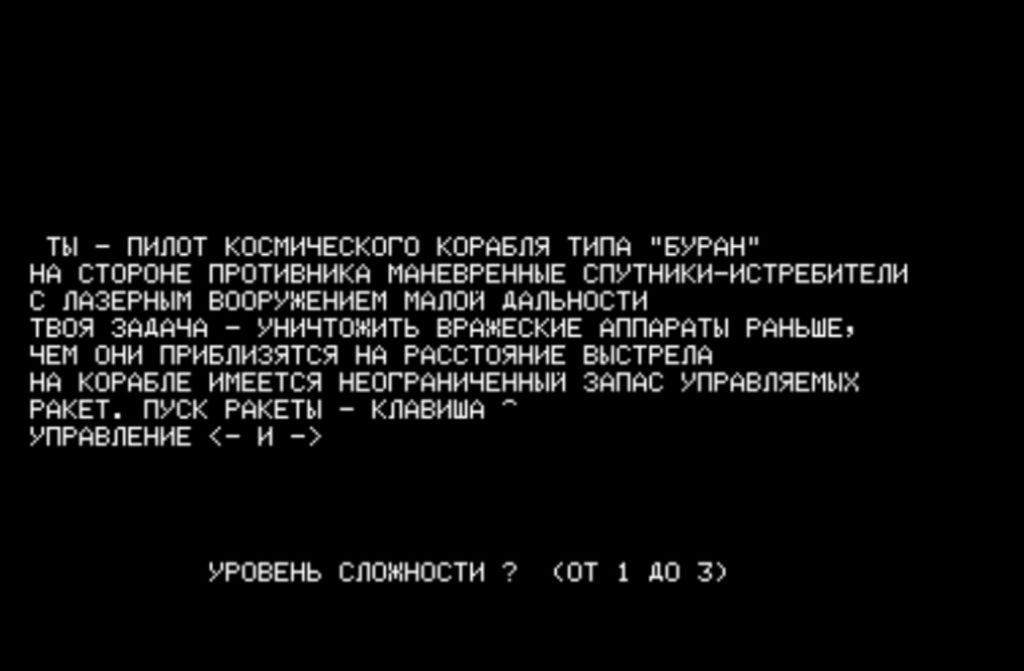
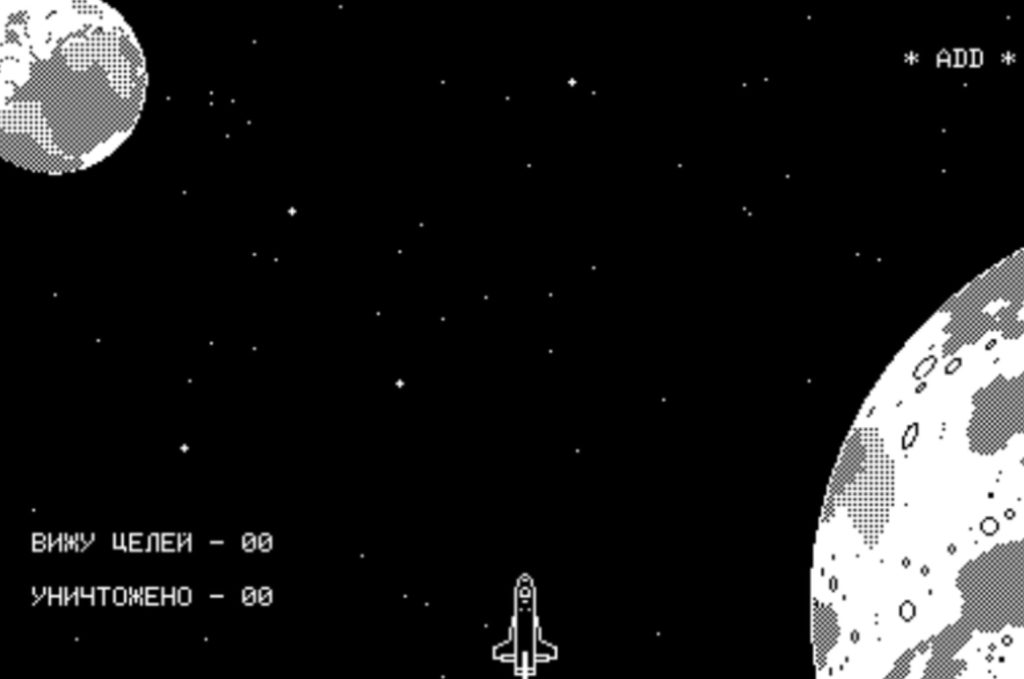
In this game, you play as the pilot of a “Buran-class spacecraft.” According to the in-game briefing, your mission is to “destroy enemy orbital satellites armed with short-range lasers before they get within firing range.”

And again, the game is based on a Western title — a clone of the vertical scrolling shooters popular in the late 1980s. What stands out is the game’s title: Star Wars. And no, this isn’t (just) a reference to George Lucas’s cinematic universe, it’s a reference to the Strategic Defense Initiative (SDI), a real Cold War-era U.S. military program.

Launched by President Ronald Reagan in 1983, SDI was a sweeping research program aiming to develop a multi-layered anti-ballistic missile defense system, including satellite-based lasers and interceptors capable of neutralizing Soviet ICBMs at every phase of flight. The program was so futuristic that American media quickly dubbed it “Star Wars” — and the nickname stuck.

This is where cultural memory enters the frame. The game reflects Soviet anxieties around SDI: the Buran destroying enemy satellites evokes the techno-political imagination of the era. Despite its NASA affiliation and official status as a civilian craft, the U.S. Space Shuttle was widely viewed, both in the USSR and in the U.S., as a potential military asset within SDI’s framework.

By preserving and interpreting the imagery of the late 1980s, both Assembling Buran (1991) and Star Wars (1988) serve as examples of how late-Soviet video games became platforms for engaging with and localizing global narratives of military-technological rivalry in space. These games reflect anxieties and aspirations of the Cold War and also offer unique insight into the cultural encoding of national pride through interactive media.

Next:
Sberkassa No. 2 (1996): Memory of the Russian turbulent 1990s